
Understanding Water Pump Related Parts
Knowing the components of a water pump will help you comprehend how it operates better. Everyone familiar with the operation of modern engines knows how crucial water pumps are for the functioning of automobiles. Your engine heats up if there is no reliable water pump in your vehicle, which is unsafe. However, the functioning of a water pump is quite complicated. There are several main parts of mechanical water pumps and in this article, you will understand their essentiality, dependability, and effectiveness.
What Is A Water Pump Pulley?


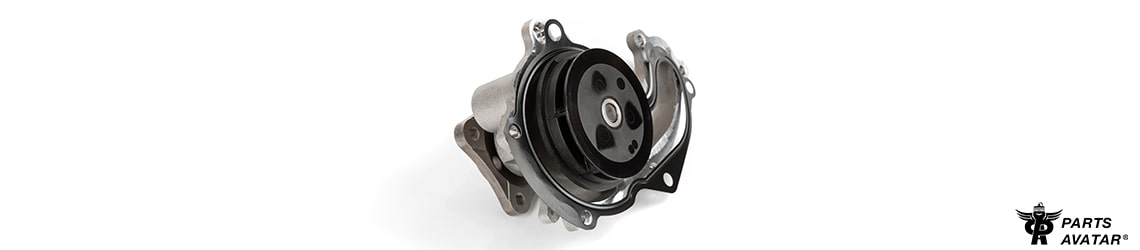
The water pump in your car is assisted in its operation by a pulley. Your engine cools down by coolant being circulated by the water pump, which is powered by a water pump pulley. Water pump pulley designs can vary according to the vehicle year, make, and model. The water pump pulley usually has a very basic design and it can be convex or concave, with holes to mount them on the water pump assembly. If the water pump pulley is not aligned properly you can buy spacers to align it. These spacers are important, as a misaligned belt wears down quickly and may fail.


What Are The Symptoms Of A Bad Water Pump Pulley?
A vehicle's water pump is powered by a system of pulleys and belts. Automobiles employ a serpentine belt that wraps around the engine and turns pulleys that drive various accessories, such as alternators and air conditioning systems.
The water pump pulley becomes unresponsive when it wears down, making it impossible for the water pump to effectively circulate water or coolant throughout the engine. It is advised that the water pump pulley must be replaced before it breaks to avoid engine overheating. There are a few warning indicators that will let you know there is a pulley issue with your water pump:
Physical Damage To The Water Pump Pulley
The water pump pulley’s metal part can be damaged due to the installation of the wrong size of the water pump belt. If the water pump belt is not adjusted properly, there can be issues with the internal bearings that allow the water pump pulley to spin freely and eventually fail the water pump pulley. If a mechanic tells you that the water pump pulley on your water pump appears to be damaged, replace it as soon as possible.
Significant Wear On Water Pump Belts
When a mechanic inspects the underside of your car and discovers significant wear on the water pump belt that comes into contact with the water pump pulley, it's another sign that the water pump pulley is damaged. The water pump belt may vibrate and generate additional heat if the water pump pulley is loose. When this happens, the belt might break into two halves or slightly crack because they are mostly made of rubber and nylon cords for strength. There is an issue with the water pump pulley if it is found that the water pump belt is wearing out earlier than it should.
Grinding Noise From The Vehicle’s Front End
The problem with a water pump pulley is often with the bearings inside the pulley. When the bearings wear down, they make a metal-to-metal grinding sound, which is usually caused by a lack of lubrication or a faulty bearing. This sound is difficult to detect while driving; however, if you hear a grinding sound while the car is idling, pull over, open the hood of your engine, and listen intently to the front of your motor. If you hear a continual grinding sound, close the hood and drive safely home. Contact a mechanic to evaluate the problem and, as a precaution, have the water pump pulley replaced.
Overheating Engine


If your engine temperature is in the "red zone" on your dashboard temperature register, it is an immediate indication that there is a problem with the coolant system. Whether it's low coolant, a problem with the radiator, the fan, or the water pump, a trained mechanic should inspect it as soon as possible. One common error that inexperienced mechanics make is presuming that the water pump is broken when, in reality, the water pump pulley has failed to function properly.
What Is A Water Pump Seal?


Automotive water pump seals are light mechanical seals specifically designed for automotive engine water pumps. Water pump seals have an acceptable construction, are easy to install, and have a long service life. The primary role of a water pump seal is to ensure that the water pump is firmly sealed and preserve the water pump bearing by limiting coolant loss and contamination. A water pump seal is made up of two distinct portions, one of which is linked to the body of the water pump and the other of which revolves around the bearing axle. The water pump will stop working if it cannot exert enough pressure due to a coolant leak. The water pump seal is crucial to keep the water pump in functioning order The performance of the water pump is ensured by the water pump seal's quality and a suitable amount of coolant.
What Is A Water Pump Inlet Tube?


What Symptoms Suggest That The Water Pump Inlet Tube Needs To Be Replaced?
High heat levels caused by low coolant can quickly destroy an engine, and even a minor leak can drastically reduce coolant levels. Heat and environmental conditions might cause your water pump inlet tube to rust. It is best to replace the engine coolant at the same time as the water pump inlet tube.
Your vehicle's water pump inlet tube has no service intervals or maintenance requirements. It should be inspected for leaks during routine maintenance. If the water pump inlet tube is leaking, contact a skilled mechanic right away to replace the water pump inlet tube.
Below are the symptoms of a bad water pump inlet tube:
If there is a coolant leak present on either side of the water pump inlet tube, you must replace it immediately
You need to replace your vehicle’s water pump inlet tube when the low coolant warning lamp is illuminated
If the engine overheats, it is a sign that the water pump inlet tube might require replacement
If the heater does not generate heat, it is another symptom that the water pump inlet tube requires replacement.
If Corrosion is seen on the exterior of the water pump inlet tube suggests that the water pump inlet is deteriorating and needs to be replaced. If not replaced it can damage the engine system.
What Is Water Pump Housing?


The outer shell that encases the water pump is known as the water pump housing. Although many current engines have stamped-steel water pump housings. The water pump housing contains a weep hole, which allows any coolant to leak from a defective seal, preventing it from becoming trapped and being driven into the water pump bearing assembly. The weep hole is only a few millimeters in diameter and is situated between the hub and the water pump seal on the top, side, or bottom of the water pump housing unit.
What Causes A Water Pump Housing To Crack?
Crack Caused Due To Coolant Leak
Driver error is to blame for this type of problem. When an engine overheats, you would think that the logical next step is to add coolant to help it cool down. While this is a noble gesture, it does more harm than good. This abrupt and rapid cooling causes a thermal shock and can break the water pump housing.
Damage Caused Due To Rust
Rust is likely to form where metal and fluids come into contact. When you add water with a high mineral concentration, you enhance your chances of rust damage. Rust generates tiny particles that are abrasive and can wear through the water pump housing, causing leaks.
O-Rings with Insufficient Lubrication
When replacing the water pump, the O-rings must be well maintained with either coolant or oil to prevent them from becoming dry and causing cracks in the water pump housing.
Cavitation
Cavitation occurs when a liquid changes pressure quickly and partially evaporates, resulting in cavities. When the pressure builds up, the voids produce tremendous shockwaves. These have the potential to cause harm to the water pump and water pump housing.
Fan Deteriorating
Some water pumps have a fan to improve their performance and efficiency. If the fan is bent or distorted due to the impact and excessive heat, it might harm the water pump and water pump housing and contribute to leaks.
Shaft Bearings Become Old
Water pump problems can be indicated by worn shaft bearings. Shaft bearings fail because they have reached the end of their useful life. Poor alignment, poor maintenance, and improper driving habits can also fasten this process. Naturally, anything that puts additional strain on the water pump will also put a strain on the water pump housing, hence causing serious damage to both.
Impeller Slipping On Water Pump Shaft
Although this kind of problem is considerably less common, the impeller slipping on the water pump shaft can cause the water pump housing to leak or the water pump itself to get damaged. The impeller, which is the pump's spinning component, can deteriorate with use and corrosion. Rust can make it begin to break apart and leave behind fragments of parts that contaminate the cooling system and impair its performance. The water pump's capacity is also compromised when rust occurs.
Aging
The water pump housing can become worn out and break with age, causing fluid to escape from the water pump system.
Buying Guides & Articles on Auto Parts
Articles and Guides written by auto parts experts to ensure you have all the required knowledge to make the correct purchase here at Parts Avatar.
Read all Guides & Articles