


Learn All About Auto Diesel Particulate Filter
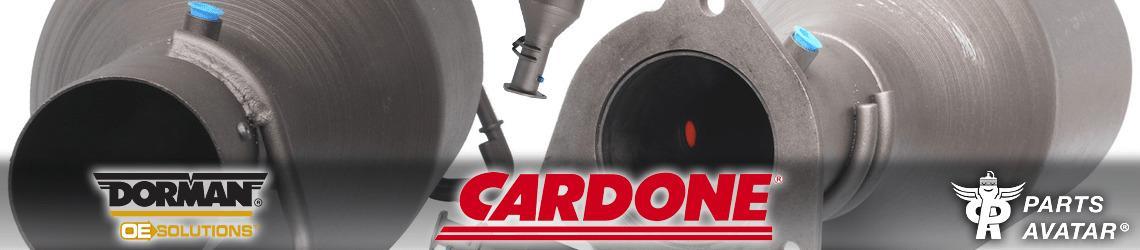
What Is Diesel Particulate Filter?
This filter traps and
stores soot from the exhaust (also referred to as soot traps) for reducing
emissions from diesel cars. It should be noted that due to finite capacity, the
soot trapped should be cleaned or burned off periodically in order to
regenerate the DPF. This process of regeneration burns off the excessive soot
deposited in the filter that further decreases the toxic exhaust emissions,
thereby preventing the significant black smoke coming out of the diesel
vehicles (especially while accelerating).


Materials Used In Diesel Particulate Filter?
Materials used in the
diesel particulate filter include ceramic materials because they have good
thermal durability. The most common ceramic materials used include cordierite,
silicon carbide and aluminum titanate.
Important features Of Diesel Particulate Filter
Do you know
everything about a DPF filter? The diesel particulate filters (DPF) are now greatly used as an
effective means for overcoming increasingly severe particle emission
regulations. Currently, this has been in the spotlight for the exploitation of
passive regeneration of DPFs for decreasing fuel consumption following usual
active regeneration. The non-flammable material or ash is extracted from the
metallic additives found in the engine lubricants also collects in the DPF over
time. Further, this collection of ash leads to an increase in the flow
restriction and a significant rise in pressure drop throughout the DPF. Well,
this growth of pressure drop negatively affects the engine performance and fuel
efficiency. The connection between ash and catalyst plays a crucial role as
passive regeneration is dependent on the catalyzed reaction. The procedure of
passive regeneration totally relies on exhaust feed gas composition, exhaust
conditions that involve temperature, flow rate, catalyst type, configuration
and the state of DPF loading prior to passive regeneration. In conclusion, the
main objective of this study is to tackle the long-term effects of regeneration
parameters on ash depositions and its final effect of ash on the DPF catalyst
performance.
Various experiments were
performed that focused solely on pressure drop measurements of the diesel
particulate filters with a number of regeneration methods paired along post
mortem ash characterization. All this helped in providing a helpful insight
into how these regeneration methods affected the DPF performance.
How Does Diesel Particulate Filter Works?
In the process known as DPF
regeneration, the toxic diesel gases that get trapped by the diesel particulate
filter are cleaned regularly. The soot accumulated is burnt off at increased
temperatures resulting in an “ash-like” after product. After the regeneration
of DPF, this whole cycle starts again. In all there are three types of
regeneration:
1. The Active DPF Regeneration - During this, the back pressure of
the exhaust or soot load of the filter is read in order to determine the time
to begin the regeneration. Now that it has been started, the timing of the fuel
injection tends to change resulting in increased exhaust temperatures for
burning the soot particles.
While the active DPF regeneration takes place, you are likely to notice:
- Increased idle RPM/Speed
- More functioning of the cooling fan
- Falling fuel economy
- Unusual odour from exhaust
- Changes in the engine note
- Also, passive DPF regeneration
Now, once if the exhaust reaches the ideal temperature, passive will take place that involves the process where the regeneration begins automatically. The exhaust most likely achieves these temperatures mostly on prolonged highway driving. Also, the manufacturers that put to use this passive form of regeneration generally fix in an oxidizing catalytic converter that is near to the engine in order to increase the temperature.
2. A Forced DPF Regeneration - In this, active regeneration
fails to take place due to soot levels that reached about 70% and above. The
diesel car will mostly likely enter into the limp mode, thereby needing a
diagnostic tool to actually force regeneration. The DPF will require complete
cleansing/removal, if in case the car reaches 85% soot level.
Frequent Problems With Diesel Particulate Filter
Don’t know what things can actually
harm your DPF? At times, your diesel car might fail to realise the harm it’s
causing to the DPF. Mainly, driving into city areas ends up being a major
problem leading to this problem. Well, other reasons that might trigger this
problem are listed here right below:
- Short distance journeys where the
engine fails to reach the ideal temperature required for operations
- Jammed EGR valve
leads to a rise in the diesel
soot passed to the DPF
- Increased fuel quantities being sent
to the air/fuel mixture by damaged fuel injectors
- Wrong engine oil used during the
servicing of the car - (low ash + low Sulphur needed for DPF cars)
- Oil leakage into the DPF leading to
a failed turbo
- Increased mileage car leading
difficult regeneration
Symptoms of Diesel Particulate Filter?
It can be seen that most of the DPF
installed in latest cars are likely to have a trip computer. Firstly, you will
see error codes such as the DPF light or EML (engine management light) that
will indicate towards problem with a failure in the DPF.
Although, you can clear these
false alarms using OBD-II diagnostic tools. Well, if it
continues, to show up, then you might notice the following symptoms:
- Decreased power
- Fall in the fuel economy
- Abnormally bad throttle response
- Failure in starting the vehicle
- The vehicle might enter the limp
mode
- Bad odour
Top Brand for Diesel Particulate Filter
If you know which car parts brand suits the best for your Diesel Particulate Filter, then it would save a lot of your decision-making time. What we believe is that picking a particular brand would always be helpful in reducing the clutter, and at the same time would make it easier for the customers to find what they are actually looking for. That’s why we have listed out some top brands for Diesel Particulate Filter below as follows:
|
|
|
Total Costs & Repair Times, Effort For Diesel Particulate Filter
Disappointment in the diesel
particulate filter arrives in a great deal of structures. Yet, observe that
it's anything but a reasonable fix. In some cases, at last you may discover
that there is a need of complete Diesel Particulate Filter substitution. There
is no quick and hard number with respect to what amount would a Diesel
Particulate Filter substitution would cost as it relies on a ton of components
like the brand, make, model just as the specialist who is going to fix/replace
it. Yes, diesel particulate filters can at times be very expensive. Cost of a
new one can range from £1,000 to £3,500.
How to Change Diesel Particulate Filter?
Don’t know how to go about changing
the diesel particulate filter? Don’t worry, Parts Avatar has all the
information you need. The diesel particulate filter on the car can confuse you
for being an exhaust silencer. You can locate it closer to the engine where it
is warm. The PDF will heat up faster and burn off the soot particles easily
with the help of the heat provided from the engine. If in case the DPF warning
lights are illuminated, make use a cleaner to clear any blockages first as this
procedure might solve the problem and is very cheap.
If the cleansing fails to work, then
a replacement of the DPF should be performed. Purchase a new DPF filter from
Parts Avatar, if you want to install if by yourself keeping the expenditure
minimum. Here is a guide that’ll help
you replace your DPF:
Step 1 - You Need To Jack Up Your
Car
Firstly, park the car on a clear
flat surface. Make use of the jacks to raise all four wheels the car off the
ground. You will find the DPF under the car (you won’t be able to reach it
using the sideways of the vehicle). Lie down right under the middle of the car
in order to fully access it. Be cautious with all the preventions as this might
take a lot of time.
Step 2 - Find The DPF
Well, note that DPFs often vary in
size, shape and color but generally contains a broad section of exhaust tube
that is mounted close to the engine, under the car.
Step 3 - The Bolts And Screws Should
Be Removed
Be careful while observing the position
of the DPF so that you can fit in the new one correctly. Ensure that you remove
all of the screws and bolts that fix the DPF right in place and secure them.
Also, you won’t be required to change the filter from its heat guards as the
new filter will have heat shields of its own. This will make the process of
removal easy (take it off in one piece).
Step 4 - Fix In The New Filter
Take time while performing the
fittings of the bolts and screws while fitting the new DPF in exactly the same
position as the old one. All the nuts and screws and washers which came off the
original filter should be removed.
Step 5 - Check That It’s Safely And
Properly Done
Test well to see if you have
tightened and fixed the DPF right in place to avoid leakages in the exhaust
system as a slightly loose fitting between various sections of pipe can lead to
major problems like low pressure and more fuel consumption.
Step 6 - Lower Down The Car
It is essential to clear the area
underneath the car. Remove any tools that might have been used while removing
and replacing the DPF. Lastly, lower the jacks slowly so that the car is put
down again.
Step 7 - Test To See This Works
You can take a drive for a short
while (prefer quiet, open roads where you can speed up). Then wait to see if
the warning light goes off. If in case, any other warning lights illuminate, or
if you notice something wrong with the car, stop the engine and take the car
back again to figure out the problem. Carefully check any dislodging’s that
might have happened while fixing the DPF. If nothing happens, rejoice as your
replacement has been done.
Step 8 - Maintenance
We advise you to use a DPF cleaner
regularly to ensure that this new filter lasts longer and works efficiently.