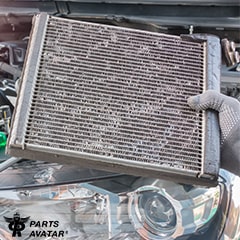

You Should Know This About Your Car Radiator Fan & Assembly

A cooling fan assembly is made up of a mounting shroud, a motor and a fan blade. It draws air into the car radiator, which transfers the heat from the car engine coolant to the outside air. To understand how it works, keep on reading further.
What Is A Car Radiator Fan & Assembly?
As we know, the engine of the vehicle has to be maintained at a proper temperature so that it doesn’t become too hot or too cold. The radiator cooling fan helps in regulating the temperature of the engine. It does this by pulling in the air through a radiator. Even though it performs this task, most of the cooling doesn’t actually happen because of the radiators.
The radiator fans are broadly divided into two; mechanical and electric. The former is belt driven and the latter makes use of DC motors, which run off the electrical system of the vehicle.


Where Is The Car Radiator Fans & Assembly Located?
You will locate the radiator fans between the radiator and the engine. Sometimes, these radiator fans are at the front of the radiator as well. Most of these fans are electric and are mounted in the front and are alternatively known as pusher fans. The ones that are at the back are known as puller fans. The major difference between the two is that the pusher fans receive air coming in through the grill area, which they cool and push over the radiator. The pillar fans on the other side pull in air from the grill, drawing it over the radiator.
What Are The Types Of Car Radiator Fan & Assembly?
The engine driven fans are of three types; have a look at their features below:
1. Solid Fans - The speed of the fans is basically the speed of the pulley driven by the fan belt. As the engine runs faster, the fan also increases its speed. The fan will pull in plenty of air across the radiator, keeping the engine and the air of the AC cool. This type of fan is simple and not likely to break easily, but it’s not the most optimal. Since it runs only when the engine is running, it delays engine warm-up. This fan runs purely on the vehicle’s energy, so it uses up plenty of power and fuel and also causes noise. When the car is moving fast enough, it will receive plenty of air to cool it, anyway. The fan in such a scenario is eating up energy of the car unnecessarily. Apart from this, these fans use more power and fuel in dyno tests than when the vehicle is actually in motion and the wind is flowing through the blades.
2. Clutch Fans - This is an improved version and is primarily a solid fan which is bolted to the body of the clutch unit. The blade can either be driven by the clutch or be freewheeling. The centrifugal clutch is one type of clutch fans. This fan lets the blade slip above a certain rotative speed. The assumption is that if the engine is spinning faster than a specific set speed, then the car is moving fast enough to not need the fan. But if the car is going at a lower speed and doesn’t require as much cooling, the fan continues to use the power and fuel of the car. This leads to increased costs and noise.
3. Flex Fans - This is a one-piece plastic item which looks like a solid Steel fan or may be a sprint steel/aluminium blade which is riveted to the ‘leg’ of a central spider hub and support. These fans are noisy because of the oscillation in the blades. These blades are flexible and also straddle the flex point. The blade flattens out when a specific level of force from air resistance is against it. The build of the fan is overall calculated in such a manner that the fan will flatten out fully at a particular RPM. Lot of noise may be created in flattening and curling of the blade as per the increase and decrease of air resistance. These fans are also known to be dangerous, as the flexing results in material fatigue. They may even break and fling out of the hood and shoot out at random people.
What Are The Materials Used In Making Car Radiator Fan & Assembly?
Here’s a breakdown of the materials of the radiator fan. Four to seven metal or plastic blades are placed in a cross-crossed fashion around the central hub. This is bolted onto the water pump pulley. Presently, different grades of aluminium and steel are broadly used for making radiator fans. Aluminium has several advantages over steel, like corrosion resistance and cost, however it offers less strength compared to steel. Composites can be utilized conveniently to restore existing materials for radiator fans.
How Does My Car Radiator Fan & Assembly Work?
As we know now, the radiator fan is to exchange the heat in the engine. Heat is produced when the engine is running, this heat dissipates to ensure that the engine doesn’t become too hot to function. These cooling fans as part of the cooling system, have reduced the temperature in the engine. The blades of the fans spin rapidly and provide the cooler air to flow through to the engine. Depending on the radiator fan installed in the vehicle, it will perform this function differently.
What Are The Common Car Radiator Fan & Assembly Problems?
Have a look at the common car radiator fan & assembly problems below:
- With time, the blades in a cooling fan may be exposed to bend or break. This will cause insufficient/ too much air to go to the radiator.
- Leakages can cause lowering of the coolant level quickly.
- The cooling fan starts and stops at a certain temperature. This is controlled by the temperature sensor. A faulty temperature sensor will not let the fan function as required by the vehicle.
- Malfunction of the fan clutch will cause failure to engage or disengage the cooling fan at the correct time. There are chances of the fuse to blow out in an electric cooling fan. This can also result in damage to the connecting wires, which will then cause electrical circuit issues.
What Are The Symptoms Of Failure Of Car Radiator Fan & Assembly?


Here are a few symptoms to look out for if your radiator fan isn’t working properly.
1. Absence of whirring Noise from the Engine Bay - A noticeable sound is made by the engine fan when it’s running. This sound can be easily heard even before you start the engine. In case you’re unable to hear it, it might be radiator fan failure. A failed radiator fan can not only mess with the performance of your car but also cause damage to other parts. A check by the mechanic will be a smart move at this point.
2. Rising Temperature Gauge - The coolant in your vehicle can’t cool down if the radiator fan isn’t working. The hot coolant will then keep circulating between the engine and the radiator and the engine cannot cool down as well. This can cause overheating of the engine, and the thermostat will catch this rise in engine temperature and trigger warning. This kind of rise in engine temperature can cause engine seizure. Solving this problem will be lengthy and expensive. It’s best to fix the fan at the earliest to avoid this debacle.
3. Coolant Evaporates - In another case, the lack of maintenance of coolant temperature can cause the coolant to simply evaporate. Since the radiator fan maintains the temperature of the coolant, it could very well be due to it. However, other reasons could also be responsible for the coolant to evaporate. It’s good to maintain the condition of the radiator fan to avoid multiple problems that could occur.
Which Tools Do I Need To Repair My Car Radiator Fan & Assembly?
If you want to repair your car radiator fan & assembly all by yourself, then you will need some auto body tools. You can always start by building your own tool chest. Searching for some tools needed to repair your car radiator fan & assembly? Don’t worry! We are here to help you out. Here are some common tools that you will probably end up needing while repairing your car radiator fan & assembly.
- Good quality electrical tapes in two different colours,
- A replacement for the Radiator Cooling Fan, which is of a good brand and is vehicle compatible
- Wrench
- The Radiator Cooling Fan Motor
- Screwdriver
Which Top Brand Car Radiator Fan & Assembly Should I Choose?
Most people prefer to avoid risk and seek safety. That is the reason they would go with a familiar auto parts brand than a new one. It would prove safe, and they know what to expect. Have a look at our top brands for a car radiator fan & assembly which would offer safety and decrease the risk of disappointment.
Which Parts Are Related To My Car Radiator Fan & Assembly?
The brighter you are, the more you have to learn! That’s why we are here to provide you more knowledge about the related parts of the car radiator fan & assembly. They are mentioned below:
What Is The Repairing Cost Of My Car Radiator Fan & Assembly?
Failure in the car radiator fan & assembly comes in a lot of forms. But take note that it is not an inexpensive repair. Sometimes, you might find out that there is a need of complete car radiator fan & assembly replacement. There is no fast and hard number as to how much a car radiator fan & assembly replacement would cost as it depends upon a lot of factors like the brand, make, model and the mechanic who is going to repair/replace it. Usually finding a substitute for the fan may set you back between $240 to $610, this is heavily dependent on the brand you go for and fitment for your specific vehicle make and model.
What Are The Steps Of Changing My Car Radiator Fan & Assembly?
Here are ways to change the radiator fan assembly in just 5 simple steps:
Step 1 - Locating the radiator cooling fan
Turn off your car, and allow it to cool, now locate the radiator cooling fan. Pop open the hood of your car and you will be able to visualise the radiator cooling fan at the back of the grill. The fan is attached at the back of the radiator via a mounting frame. You will find a sticking cylinder under the engine and the radiator. It will be encased in a small casing. That’s basically your radiator cooling fan motor, which you have to check and either repair or replace as needed.
Step 2 - Disconnecting all power supply
Now proceed to find the connector of the wires going from your engine and radiator fan motor, once you have found it simply disconnect it. Using the tapes of two different colours, note the connection of the wires, this will help you reconnect them later.
Step 3 - Removal of the fan housing
Take your crescent wrench and remove the 4 screws that are at each corner of the fan housing, be careful while doing this. After removing the screws, you can move on to removing the fasteners present at the sides of the fan housing as well. In order to extract the fan housing, which is relatively large, you will have to first remove any obstructions like hoses and wiring. Now hold the housing with a firm grip and lift it off your engine compartment. Make sure you have made space on your working table to keep it on after removal from the car.
Step 4 - Removing the Radiator Cooling Fan and the Fan Motor
Using a screwdriver, loosen the fan blade and simply slide it off its shaft. See if you need to remove the keeper as well, as sometimes it may prevent the fan blades from moving up in the shaft. Sometimes, the fan blade is pinned to the shaft. Inspect that before proceeding with removal. You can use your screwdriver to remove the motor from the fan housing.
Step 5 - Attaching the replacement radiator cooling fan and fan motor
Buying Guides & Articles on Auto Parts
Articles and Guides written by auto parts experts to ensure you have all the required knowledge to make the correct purchase here at Parts Avatar.
Read all Guides & Articles